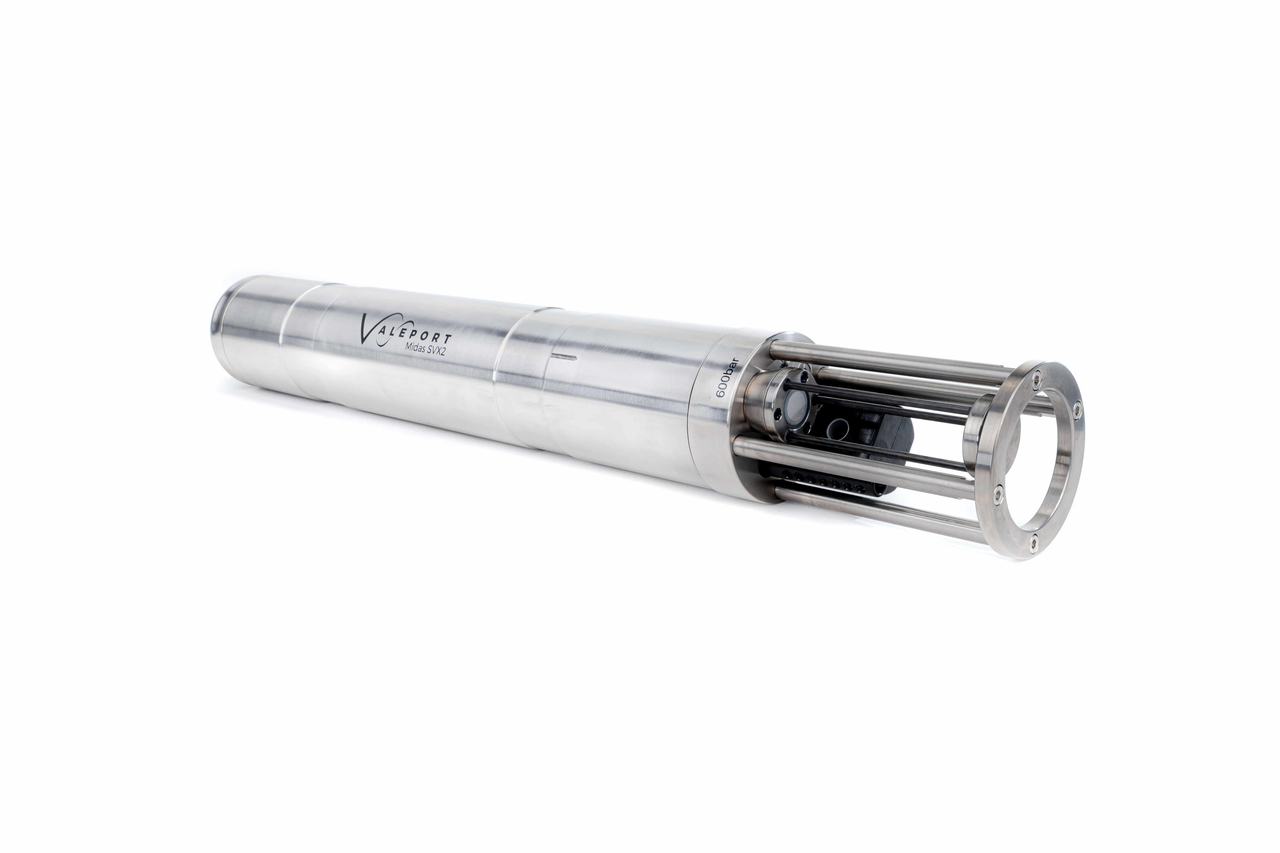
Multibeam echosounders are often compared by beam count and swath width, but the accuracy of the final depth data depends on a less visible variable: the speed of sound in water. A sound velocity profiler (SVP) measures how sound speed changes with depth, and it is one of the most important accessories in any multibeam survey. This article explains how an SVP works, why it matters, and how it is used with an unmanned surface vessel (USV).
1. How Does a Sound Velocity Profiler Work?
A sound velocity profiler measures the speed of sound at different depths in the water column. Because sound speed changes with temperature, salinity, and pressure, it is not constant between the surface and the seabed. A profiler lowers a probe through the water column, or uses a fixed sensor on the surface, and records sound speed values together with depth. Many models also record temperature, salinity, and pressure, from which sound speed can be calculated. The result is a sound velocity profile that the echosounder uses to correct its acoustic measurements.
2. Why Sound Velocity Matters in Multibeam Surveys
A multibeam echosounder converts the travel time of sound pulses into depth, assuming a certain sound speed. If the real sound speed differs from the assumed value, sound rays bend as they pass through the water, and the calculated depths become inaccurate. The error increases toward the outer beams and can appear as a bowl-shaped or smile-shaped distortion across the swath. This is why multibeam surveys require sound velocity correction, especially in estuaries, river mouths, and coastal waters where temperature and salinity change quickly.
3. How USVs Integrate SVP
USVs support sound velocity correction in two common ways. A surface sound velocity sensor can be mounted on the vessel and feed continuous data to the echosounder during the survey. Alternatively, a profiler is deployed at selected points to measure the full water column, and the profile is applied to the data afterward. Many projects combine both methods: real-time correction for the surface layer and periodic profiles for deeper water. Because the vessel is unmanned, the profiler can be deployed from shore or by a small crew without interrupting the survey.
4. Common Applications
SVP data are used wherever multibeam accuracy matters, including river and reservoir bathymetry, harbor and channel surveys, dredging monitoring, and coastal mapping. In estuaries and industrial waters, where freshwater and saltwater mix, sound speed can change quickly, so profiles are needed more often. In clean, well-mixed lakes, one profile per survey day may be enough. SVP measurements also support the calibration of ADCP and other acoustic instruments.
5. What to Consider When Selecting an SVP
When selecting an SVP for a USV survey, check the required accuracy and depth rating, the sampling rate, and whether the unit measures temperature, salinity, and pressure directly or derives sound speed from them. Confirm compatibility with the echosounder and acquisition software, and make sure the probe can be deployed safely from the vessel or the shoreline. A compact, low-power unit that matches the sonar's accuracy class is usually sufficient for inland surveys, while deep or high-salinity work may call for a higher-pressure-rated profiler.
6. Conclusion
Sound velocity is one of the least visible factors in multibeam surveying, yet it shapes the accuracy of every depth measurement. A sound velocity profiler turns that variable into a measured and corrected input. On a USV, SVP data can be collected continuously or at selected points without a full crew, making accurate multibeam surveys practical in rivers, reservoirs, ports, and coastal waters.