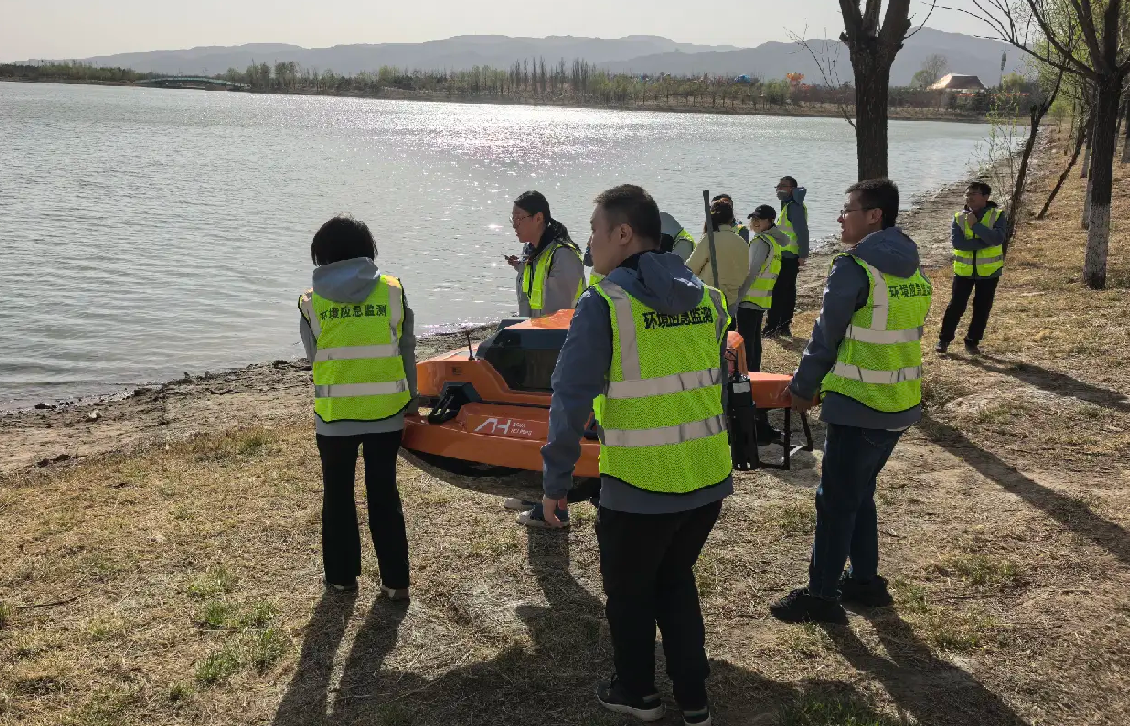
1.How Autonomous USVs Support Environmental Monitoring in Remote Waters
Environmental monitoring often requires data from places that are difficult, expensive, or unsafe for people to access regularly.
This includes remote lakes, reservoirs, rivers, industrial ponds, and other inland water bodies.
Autonomous USVs can help address this challenge by carrying sensors into the survey area and collecting data according to predefined missions.
2.Why Remote Water Monitoring Is Difficult
A conventional survey may require:
- Transporting personnel and equipment
- Launching a boat
- Collecting samples manually
- Repeating measurements at different locations
- Returning to the site for follow-up surveys
For remote locations, these steps can quickly become expensive and time-consuming.
3.What Sensors Can Be Used?
An environmental monitoring USV can be configured with:
- Water-quality sensors
- Sonar
- ADCP
- GNSS/RTK
- Cameras
- LiDAR
- Automatic samplers
The payload depends on the project.
4.Monitoring More Than One Parameter
Environmental conditions are rarely represented by one measurement.
For example, a reservoir survey may combine:
- Water depth
- Temperature
- Dissolved oxygen
- Turbidity
- Position
Combining these datasets can make it easier to identify relationships between underwater terrain and environmental conditions.
5.Where Can Autonomous USVs Be Used?
Potential applications include:
- Remote reservoirs
- Lakes
- Rivers
- Mining ponds
- Aquaculture facilities
- Environmental research areas
- Industrial water systems
6.Repeated Monitoring
One of the strongest use cases for autonomous platforms is repeated surveys.
A company may need to survey the same area every month or every quarter.
Using the same vessel configuration and similar mission routes can make it easier to compare datasets over time.
7.Conclusion
Autonomous USVs are particularly useful when environmental monitoring requires repeated data collection across large or difficult-to-access water bodies.
By combining autonomous navigation, flexible payloads, and remote monitoring, a USV can serve as a mobile environmental data-collection platform.
ame vessel configuration and similar mission routes can make it easier to compare datasets over time.