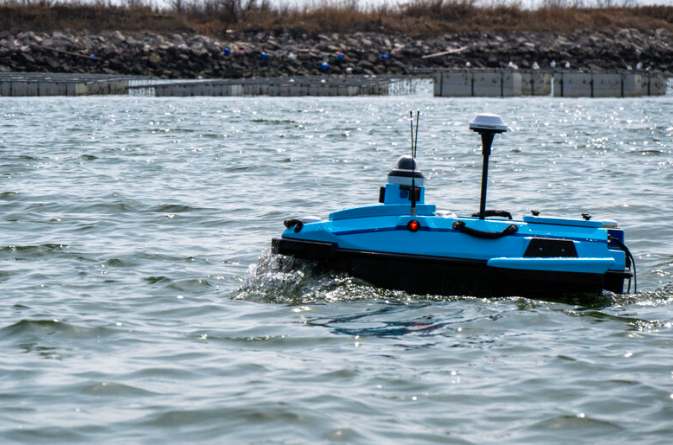
Autonomous marine surveying can reduce manual vessel operation and make repeated data collection more efficient. However, deploying a USV successfully requires careful planning. The vessel, navigation system, payload, communication method, and operating environment all need to work together.
1.Understand the Survey Requirements
The first step is to determine exactly what data needs to be collected. Bathymetric surveys may require a single-beam or multibeam echosounder, while flow surveys may require an ADCP. Environmental projects may require water quality sensors or other specialized equipment.
The required payload will directly affect the choice of USV, including its size, payload capacity, power supply, and mounting configuration.
2.Evaluate the Operating Environment
Water conditions can vary significantly between rivers, reservoirs, ports, coastal areas, and offshore environments. Before deployment, survey teams should consider water depth, currents, waves, weather, floating objects, vessel traffic, and access to the launch and recovery area.
These factors can affect both navigation performance and overall mission planning.
3.Check Navigation and Communication
Reliable navigation is essential for autonomous surveying. GNSS can provide basic positioning, while RTK may be required for applications with higher positioning accuracy requirements.
Communication is equally important because operators need to monitor the vessel and intervene when necessary. The appropriate communication solution depends on the survey area, operating distance, and local conditions.
4.Plan for Launch, Recovery, and Contingencies
A survey mission does not start when the USV enters the water. Transportation, launch, recovery, battery management, sensor installation, and pre-mission checks should all be included in the field plan.
Operators should also establish procedures for communication loss, low battery, unexpected obstacles, changing weather, or other situations that could interrupt the mission.
5.Conclusion
Autonomous marine surveying can provide significant operational benefits, but successful deployment depends on proper system selection and preparation. By matching the USV, payload, navigation system, communication method, and mission plan to the actual operating environment, survey teams can make better use of autonomous technology and collect more reliable marine data.