Discover how autonomous USVs are transforming water environment monitoring through multi-sensor technology, AI navigation, and remote control systems for smarter water management.
1.Smart Water Environment Monitoring with Autonomous USVs
Water environments such as rivers, lakes, reservoirs, and coastal areas require continuous monitoring to ensure ecological protection and water resource safety. Traditional monitoring methods often rely on manual sampling or manned boats, which can be time-consuming, costly, and sometimes dangerous in complex water conditions.
With the advancement of Autonomous Navigation USV technology, unmanned surface vehicles are becoming an important tool for modern smart water management. Equipped with advanced sensors, intelligent navigation systems, and remote control capabilities, these platforms enable safer, faster, and more accurate environmental monitoring across large water areas.
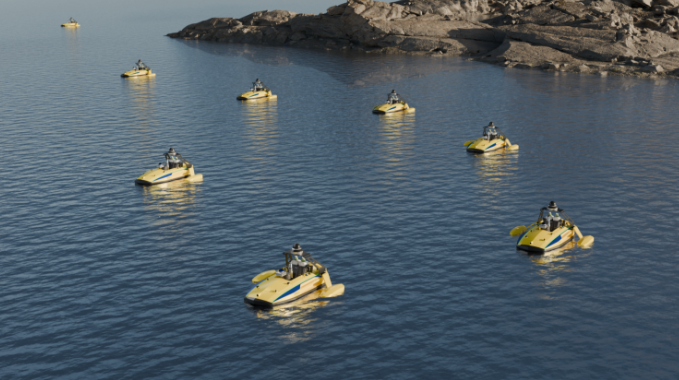
2.Why USVs Are Transforming Water Environment Monitoring
Modern Water Quality Monitoring USVs integrate autonomous navigation, environmental sensing, and remote communication technologies. These capabilities allow environmental agencies and water management authorities to collect high-precision data without sending personnel into potentially hazardous environments.
Compared with traditional survey methods, Multi-sensor USVs offer several advantages:
- Autonomous route planning and navigation
- Real-time data transmission and monitoring
- Continuous environmental observation
- Reduced human risk in difficult water conditions
- Higher operational efficiency across large monitoring areas
By combining Remote Control USV Systems with autonomous navigation technologies, operators can remotely deploy vessels, monitor mission progress, and retrieve environmental data in real time.
3.Key Applications of Water Monitoring USVs
3.1 Water Quality Monitoring
One of the most common applications of Water Quality Monitoring USVs is collecting real-time environmental data. Equipped with multi-parameter sensors, these systems can measure indicators such as:
- Water temperature
- pH levels
- Dissolved oxygen
- Turbidity
- Conductivity
- Chlorophyll concentration
- Nutrient levels such as nitrogen and phosphorus
By enabling continuous monitoring across multiple sampling locations, USVs help environmental agencies detect pollution risks earlier and better understand ecosystem changes.
3.2 Hydrographic and Hydrological Survey
In addition to environmental monitoring, Hydrographic Survey USVs play an important role in hydrological studies and underwater mapping.
By integrating sonar systems and current measurement sensors, USVs can collect important data including:
- Water depth and underwater terrain
- Flow velocity and direction
- River discharge and hydrological dynamics
Compared with traditional survey vessels, USV Autonomous Navigation Technology enables more stable survey routes and higher consistency in data collection.
3.3 Pollution Detection and Environmental Inspection
Autonomous vessels are also increasingly used for environmental inspection and pollution monitoring. Equipped with sonar, cameras, and environmental sensors, these platforms can support tasks such as:
- Drainage outlet inspection
- Pollution source investigation
- Aquatic ecosystem monitoring
- Reservoir and lake environmental assessment
Because they can operate remotely or autonomously, Autonomous Inspection USVs reduce the need for personnel to enter contaminated or difficult-to-access areas.
4.AI and Autonomous Navigation in Smart Water Systems
Recent advances in AI for Smart Water management are further expanding the capabilities of unmanned monitoring systems.
By integrating artificial intelligence with Autonomous Navigation USVs, modern monitoring platforms can:
- Automatically plan optimized monitoring routes
- Detect obstacles and avoid collisions
- Adjust navigation paths in dynamic water environments
- Support long-duration autonomous missions
These capabilities make USVs an increasingly important part of intelligent water infrastructure and environmental protection systems.
5.Industry Trends in Water Monitoring USVs
The global maritime technology sector is witnessing rapid growth in the adoption of unmanned surface vehicles. According to recent USV industry trends, environmental monitoring, hydrographic survey, and emergency response are among the fastest-growing application areas.
Governments, research institutions, and environmental organizations are increasingly adopting Remote & Autonomous USV platforms to improve monitoring efficiency and expand observation coverage.
As sensor technology, autonomous navigation systems, and data processing platforms continue to advance, Smart Water Management USVs are expected to play a key role in the future of water resource protection.
6.The Future of Autonomous Water Monitoring
As environmental monitoring requirements continue to increase, Autonomous USV systems provide a scalable and efficient solution for long-term water observation.
Through the integration of multi-sensor technology, intelligent navigation, and remote monitoring systems, USVs enable continuous data collection while significantly improving operational safety and efficiency.
For organizations responsible for water resource protection, adopting USV-based monitoring solutions represents an important step toward smarter, more sustainable water management.