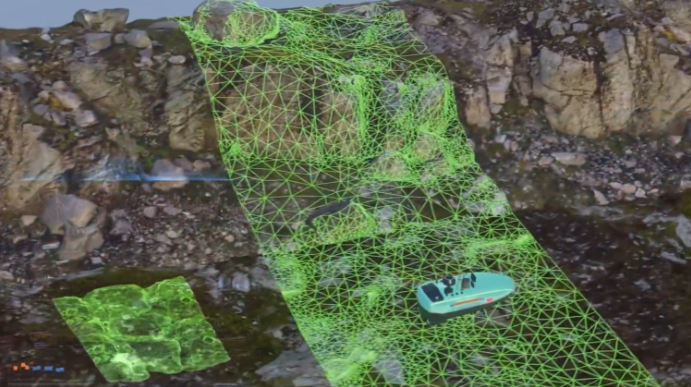
Hydrographic surveying often requires personnel and equipment to operate directly on the water. In challenging environments, this can increase the complexity of field operations. Remote-controlled and autonomous Unmanned Surface Vessels (USVs) provide an alternative by allowing survey teams to operate the vessel from shore.
1.What Is Remote Hydrographic Surveying?
Remote hydrographic surveying uses an unmanned surface platform to carry survey equipment while the operator remains away from the vessel. The USV can be controlled manually when necessary or execute a predefined autonomous mission.
During the survey, the operator can monitor vessel position, navigation status, communication, battery level, and sensor information through a shore-based control system.
2.Reducing the Need for Onboard Personnel
One of the main benefits of remote operation is that survey personnel do not need to remain on the vessel. This can be particularly useful for shallow-water surveys, confined waterways, or other environments where deploying a crewed boat is less convenient.
The USV can be launched, operated, and recovered with a smaller field team depending on the vessel and project requirements.
3.Combining Remote Control With Autonomous Navigation
Remote operation and autonomous navigation are not competing approaches. In many USV systems, they work together.
The vessel can follow a planned survey route automatically while the operator supervises the mission. If conditions change or an unexpected situation occurs, the operator can intervene and take manual control.
This combination provides both automation and human oversight.
4.Where Can Remote Surveying Be Used?
Remote USV surveying can support bathymetric surveys, river mapping, reservoir monitoring, port surveys, environmental data collection, and other marine data acquisition tasks.
The appropriate communication method depends on the operating area, required range, local conditions, and project requirements.
5.Conclusion
Remote hydrographic surveying can simplify field operations by separating the operator from the vessel itself. When combined with autonomous navigation and professional survey sensors, USVs provide a flexible approach to collecting marine data while reducing the need for continuous onboard operation.