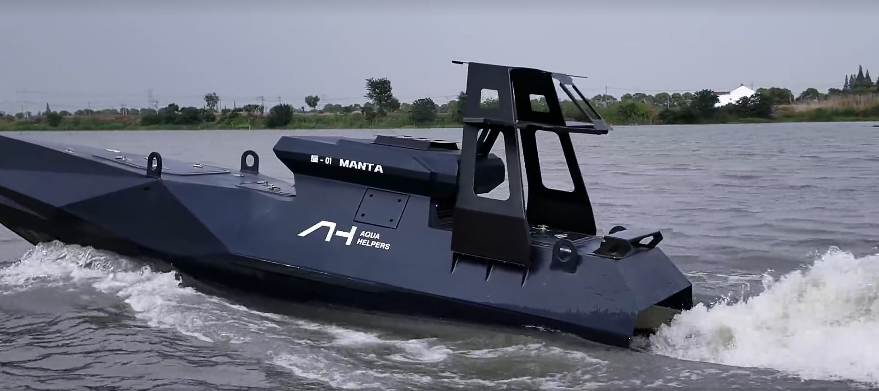
The marine industry is undergoing a major transformation as autonomous technologies become more widely adopted. Among these innovations, Unmanned Surface Vehicles (USVs) are emerging as an efficient solution for marine data collection, environmental monitoring, and hydrographic operations.
For decades, marine surveys have mainly relied on traditional vessels operated by crews. While these methods remain effective, they often involve high operational costs, complex logistics, and safety challenges, especially when working in remote or hazardous environments.
Autonomous USVs provide a new approach by combining intelligent navigation, advanced sensors, and remote operation capabilities to collect accurate marine data with greater efficiency.
1. From Traditional Survey Boats to Intelligent Autonomous Platforms
A modern USV is more than a remote-controlled boat. It is an integrated intelligent platform that combines:
- Autonomous navigation systems
- High-precision positioning technologies
- Communication systems
- Sensor payload integration
- Data management platforms
Depending on project requirements, USVs can carry different payloads, such as echo sounders, sonar systems, ADCP, and water quality sensors.
This flexibility allows one platform to support different marine applications, including hydrographic surveys, river mapping, reservoir monitoring, and coastal inspection.
Unlike conventional survey vessels, autonomous USVs can operate in shallow waters, narrow waterways, and areas where deploying manned vessels may be difficult or unsafe.
2.Why Industries Are Choosing Autonomous USVs
One of the biggest advantages of USVs is improved operational efficiency.
Traditional marine surveys usually require a vessel, crew members, fuel, and extensive preparation. Autonomous systems reduce these requirements by allowing operators to plan missions remotely and collect data with fewer resources.
Safety is another important factor. In environments such as offshore structures, dams, reservoirs, and polluted waters, reducing human exposure is a key priority.
In addition, compact USVs are easier to transport and deploy, making them suitable for frequent monitoring tasks rather than occasional surveys only.
3.The Role of USVs in Future Marine Operations
As marine industries become more digital, USVs will continue to evolve from simple data collection tools into intelligent marine robots.
Future developments will focus on:
- Smarter autonomous decision-making
- AI-assisted data analysis
- Multi-vehicle collaboration
- Cloud-based marine management systems
These technologies will help organizations collect more accurate data while reducing operational complexity.
For companies involved in hydrography, environmental protection, marine engineering, and water management, autonomous USVs represent a significant step toward safer and more efficient operations.
4.AquaHelpers: Building Intelligent USV Solutions
AquaHelpers develops full-stack autonomous USV solutions, integrating vessel design, autonomous navigation, software systems, and payload compatibility.
With flexible platforms designed for hydrographic survey, water quality monitoring, and marine inspection, AquaHelpers helps customers improve efficiency and unlock new possibilities in marine operations.