Water resources are becoming increasingly important worldwide. Governments, environmental organizations, and engineering companies need reliable methods to monitor reservoirs, lakes, and inland waterways.
However, traditional monitoring methods often rely on manual sampling and crew-operated boats, which can limit monitoring frequency and increase operational costs.
Today, Unmanned Surface Vehicles (USVs) are providing a more efficient way to collect water data and support smarter water resource management.
1.Challenges of Traditional Reservoir Monitoring
Reservoirs are large and complex environments. Conditions can change significantly depending on weather, water level, seasonal variation, and human activities.
Traditional monitoring approaches often face several challenges:
- Limited sampling locations
- High labor requirements
- Difficult access to remote areas
- Safety risks during field operations
For large reservoirs, collecting enough data to understand overall water conditions can be time-consuming.
Autonomous USVs solve these challenges by enabling operators to conduct systematic surveys across wider areas with less manual effort.
2.How USVs Support Water Quality and Environmental Monitoring
Equipped with multi-parameter sensors, USVs can collect real-time information from different areas of a water body.
Typical monitoring parameters include:
- Temperature
- pH
- Dissolved oxygen
- Turbidity
- Conductivity
Compared with fixed monitoring stations, autonomous vessels provide mobility and allow operators to collect data from multiple locations.
This capability is valuable for:
- Drinking water reservoir management
- Environmental assessment
- Aquaculture monitoring
- Pollution detection
3.Beyond Water Quality: Bathymetry and Infrastructure Inspection
USVs are not limited to environmental monitoring. By integrating sonar equipment, autonomous boats can also perform underwater surveys.
Applications include:
- Reservoir depth mapping
- Sediment accumulation analysis
- Underwater terrain modeling
- Dam area inspection
Regular bathymetric surveys help operators understand changes in reservoir capacity and improve long-term water management strategies.
For engineering companies and infrastructure operators, USVs provide a safer alternative for collecting underwater information without requiring personnel to operate in potentially risky environments.
4.The Future of Smart Water Management
The combination of autonomous navigation, sensor integration, and cloud-based data platforms is creating a new generation of smart water management solutions.
USVs will enable more frequent monitoring, faster data collection, and more informed decision-making.
As water management becomes increasingly digital, autonomous surface vehicles will play an important role in protecting water resources and improving operational efficiency.
5.AquaHelpers Autonomous Water Monitoring Solutions
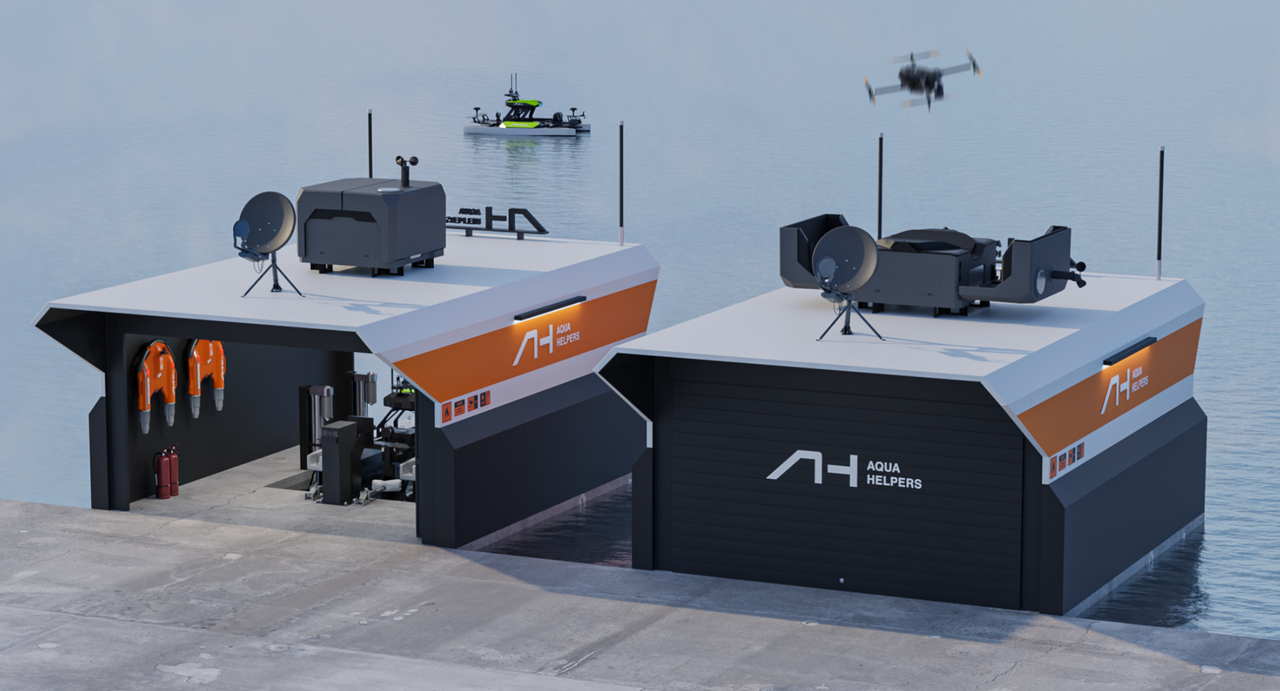
AquaHelpers provides intelligent USV platforms designed for reservoir surveys, water quality monitoring, and hydrographic applications.
Through modular payload integration and autonomous operation capabilities, AquaHelpers enables customers to collect reliable marine and freshwater data more efficiently.