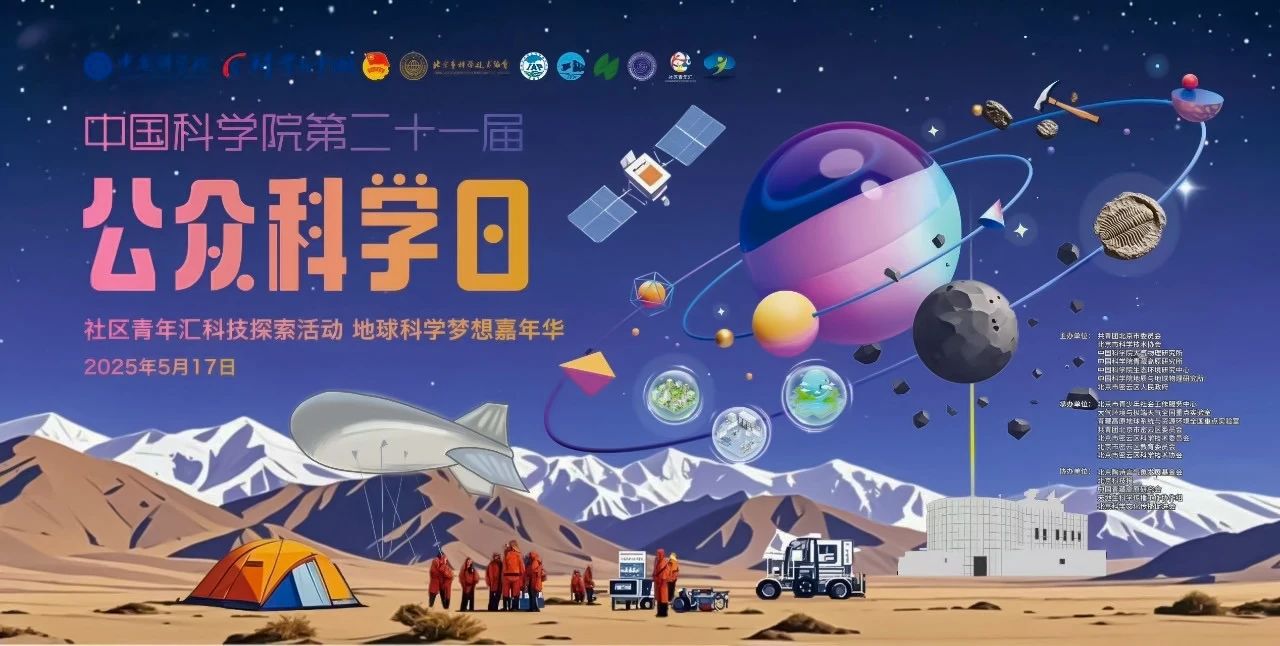
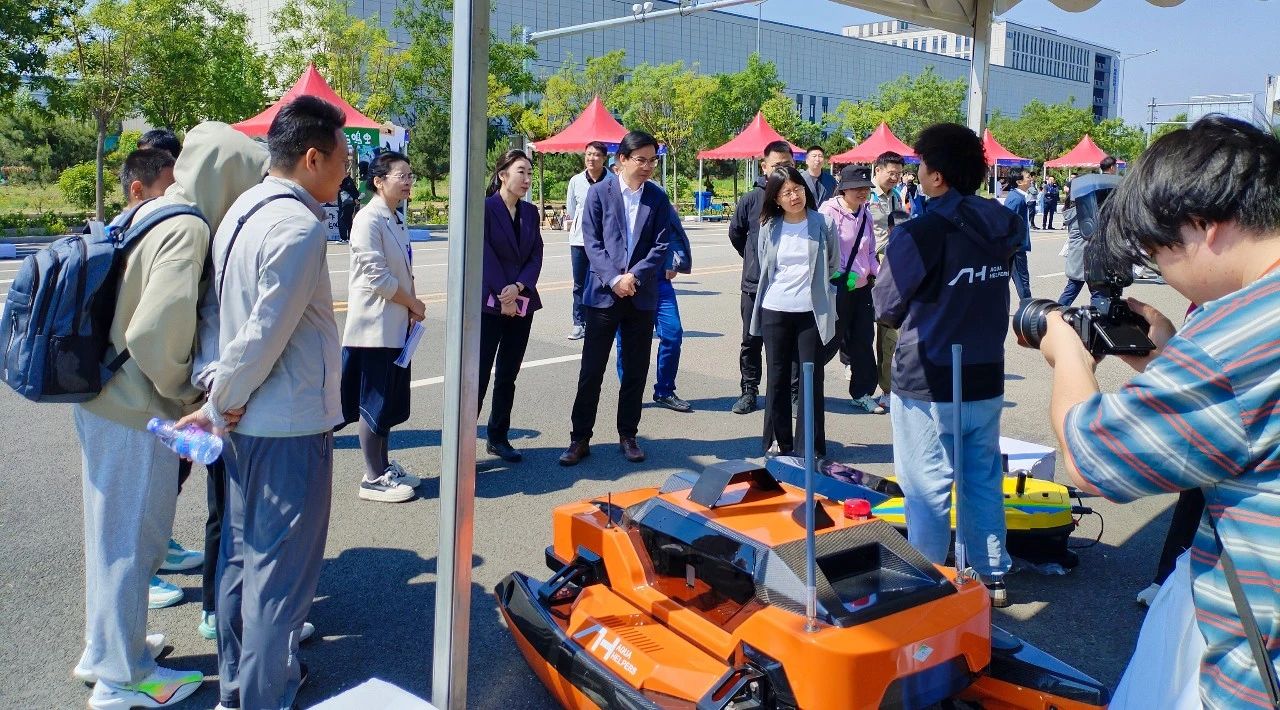
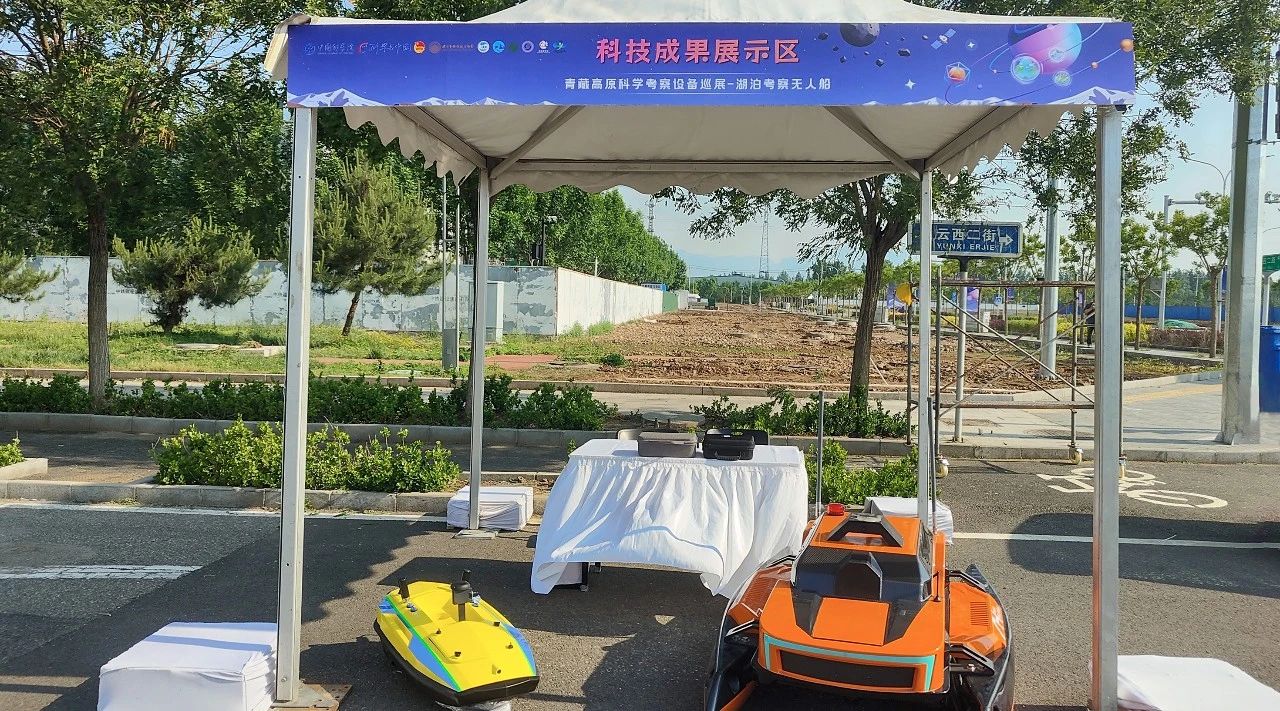
On May 17, 2025, Miyun District, Beijing, ushered in a grand gathering of technology and nature. At the 21st Chinese Academy of Sciences Public Science Day and Community Youth Exchange Science and Technology Exploration Event hosted by the Tibetan Plateau Institute of the Chinese Academy of Sciences, AquaHelpers made its debut with the "HUNTER" series and "KOI" series of USVs, attracting widespread attention with its innovative technological capabilities.
This event was jointly organized by the Tibetan Plateau Institute of the Chinese Academy of Sciences, the Institute of Atmospheric Physics, the Institute of Geology and Geophysics, and the Ecological Environment Research Center, in conjunction with the Beijing Municipal Committee of the Communist Youth League and the Beijing Association for Science and Technology. It aimed to reveal the mystery of the Tibetan Plateau cryosphere through an immersive science popularization experience.
Technology empowers plateau exploration, USV technology sparks heated discussion
At the event site, AquaHelpers' two series "HUNTER" and "KOI" became the focus. The two USVs have attracted heated discussions among scientific researchers, young technology enthusiasts and the public due to their excellent adaptability and precise mapping capabilities in the extreme plateau environment. Through dynamic demonstrations and case sharing, technicians explained in detail the technological breakthroughs of USV in scenarios such as lake bathymetry and glacier environment monitoring on the Qinghai-Tibet Plateau, triggering in-depth exchanges on "how unmanned systems can reshape the plateau scientific expedition model."
From Linzhi Lake to Science Day Site HUNTERUSV Reaffirms its Power
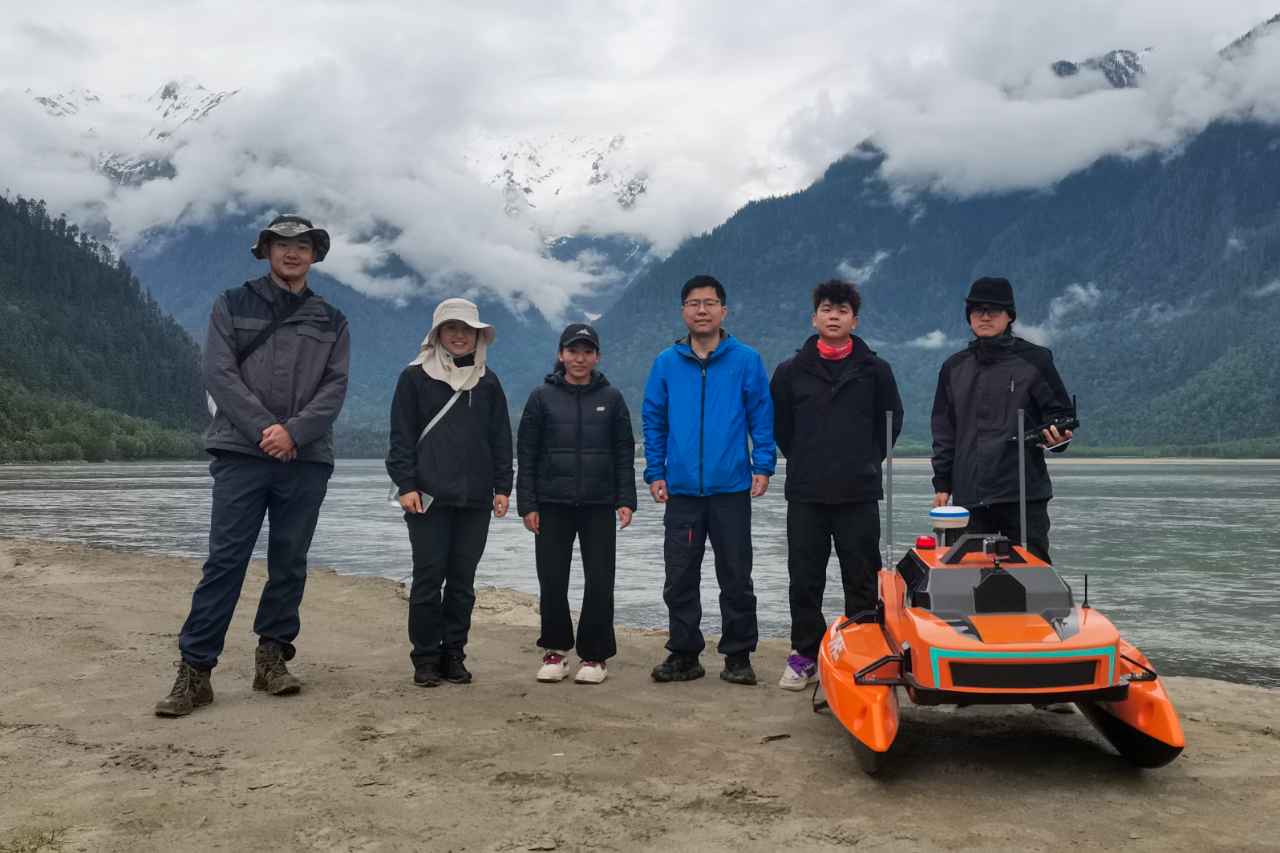
Previously, AquaHelpers "HUNTER" USV has joined hands with the scientific research team of Tsinghua University to complete landmark scientific research tasks in Yigong Lake, Guxiang Lake, and Lulang Lake in Linzhi, Tibet. The average altitude of the Linzhi area exceeds 3,000 meters, and the low-pressure environment poses severe challenges to the USV power system. Complex meteorological conditions such as strong ultraviolet rays, day and night temperature differences exceeding 25°C, and instantaneous level 8 gusts pose a direct threat to the stability of the equipment.
"HUNTER" USV is equipped with a GNSS receiver and depth sounder, and uses RTK positioning and depth sounding technology to accurately capture water depth data and efficiently complete the established scientific research data collection tasks. Technical verification shows that the "HUNTER" USV surveying and mapping efficiency in Lulang Lake is 300% higher than that of traditional manual surveying, and the data integrity rate reaches 99.7%. Its breakthrough significance is not only to shorten the operation cycle by more than 60%, but also to reduce the risk of personnel wading to zero through non-contact measurement technology. At the same time, it overcomes the inherent shortcomings of manual measurement that is limited by terrain complexity and visibility. This transformation from "manpower dependence" to "intelligence-led" operation mode is driving the surveying and mapping industry to transition to an intelligent stage of global awareness and accurate decision-making.
Looking to the future: Innovation drives a new paradigm of polar scientific research
From the actual verification of the Linzhi Plateau lakes to the public interaction at the Miyun science popularization site, AquaHelpers leverages the precise detection capabilities of the "HUNTER" series of USVs and the flexible deployment advantages of the "KOI" series of unmanned platforms to build an integrated scientific research solution covering three-dimensional scenes on land, water, and air.
In the future, the company will deepen industry-university-research collaboration with scientific research institutions, promote the in-depth application of USV technology in climate-sensitive fields such as glacier melt monitoring and dynamic evolution of permafrost, and provide independent and controllable technical support and data models for global climate change research.